
Catch Tiles: Piano Game
WingsMobMusic
4.51.00K Reviews
- Version
- 2.2.2
- Installs
- 50.00M
- Age Rating
- Teen
Screenshots
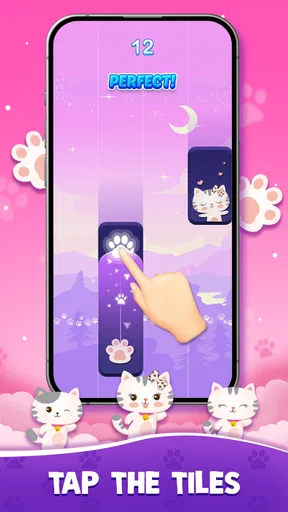
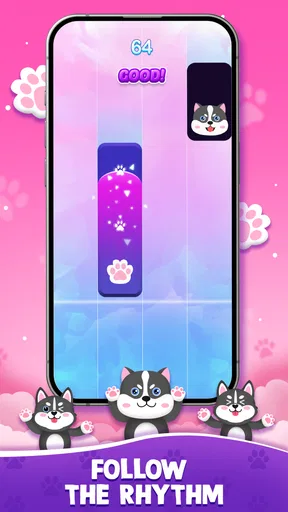
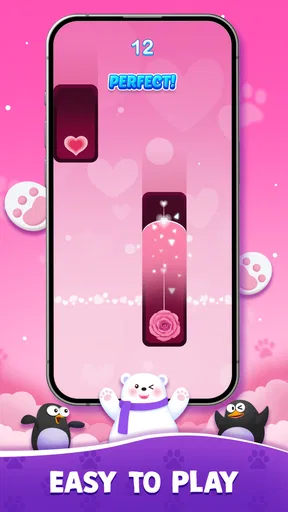
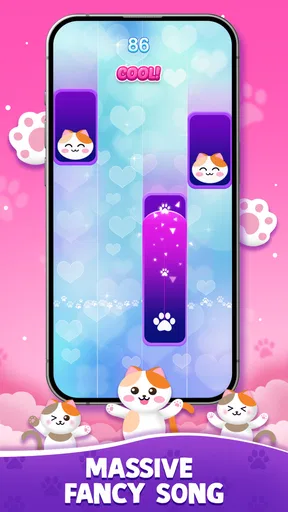
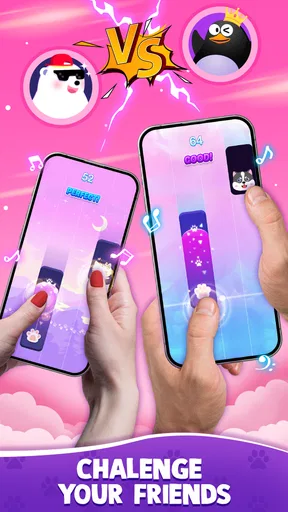
Our Review of Catch Tiles: Piano Game
 Analysis by Appyee
I found Catch Tiles: Piano Game easy to understand within a few seconds: notes move down the screen, and my job is to catch the right tiles in time with the music. That simple idea makes it approachable, but the speed and concentration it demands become much more important as a song develops. I would describe it as a music game rather than a piano-learning tool, and that distinction matters if you are deciding whether it belongs on your phone.
After spending time with it, I see the appeal. A short session can provide a quick mental reset, while a longer session turns into a test of timing, visual attention, and consistency. It is free to start, developed by WingsMob, and available for Android devices running at least version 7.1. The game is rated Teen, has reached over 50 million installs, and holds an average rating of 4.5 from around 131 thousand ratings. Those figures suggest a broad audience, but they do not remove the need to consider how comfortable the game is for your own eyes, hands, and listening environment.
How the game reads and guides you
The strongest part of the design is its immediate visual language. The tiles communicate the basic action without requiring a long tutorial or complicated menu system. I can look at the play area and understand that the important information is where the tiles are, how quickly they are approaching, and whether my next tap is ready. That directness is useful for new players and for anyone who does not want to learn a large collection of rules before playing.
Navigation also benefits from the narrow focus of the game. This is not a music editor, a virtual instrument with many controls, or a rhythm game overloaded with gauges and technical panels. The central activity stays visible, which reduces the amount of reading needed during play. I especially appreciate that quality when I open the game for a brief break and want to start playing rather than search through several layers of settings.
There is a trade-off, though. A clean screen is not automatically an accessible screen. During faster passages, the tiles can become the only thing I have time to process. If you rely on large text, strong separation between moving objects, or generous pauses, a simple interface may still feel demanding. The game’s readability depends less on written labels and more on your ability to track motion under pressure.
For that reason, I would not judge the experience only from the first few minutes. The opening can feel calm and manageable, while later play asks for faster visual decisions. A useful approach is to begin with short sessions and notice whether mistakes come from rhythm, hand placement, glare, or simply losing sight of the next tile. That small distinction helps you decide whether practice will solve the problem or whether the format itself is uncomfortable.
Why the minimal layout helps beginners
Someone who has never played a piano-tile game can understand the basic loop quickly. There is no need to know music theory, read sheet music, or own a keyboard. I can play with one finger and gradually learn the relationship between the song’s movement and the required taps. That makes it a good choice for casual players who enjoy music but do not want a demanding simulation.
The lack of musical knowledge is also helpful for younger players within the Teen rating and for adults who feel intimidated by traditional piano apps. Catch Tiles presents timing as a game challenge instead of presenting a lesson plan. I would recommend it to a friend who wants something more active than simply listening to a playlist, but who does not want to commit to learning an instrument.
At the same time, the uncluttered approach means the game does not explain musical structure in much depth. It may improve your sense of timing through repetition, but I would not use it as a replacement for piano instruction. If your goal is to learn scales, finger technique, notation, or expressive playing, a dedicated lesson app or real keyboard will serve you better.
Motor, visual, and sensory demands
The main physical requirement is repeated tapping with accurate timing. In slower sections, I can use one finger comfortably. When the pattern accelerates, I need to move across the screen quickly and avoid covering the next tile with my hand. That makes phone size relevant: a larger display may give me more room to see the lane, while a smaller phone can make rapid movements feel cramped.
This is one of the less obvious trade-offs. A small device is convenient for playing on the go, but convenience can work against precision. I get better control when I hold the phone steadily and keep my tapping finger close to the active area. Resting the device on a table can help during longer sessions, although that is less practical on public transport or while standing in a queue.
Players with limited fine-motor control may find the game more comfortable at a slower pace and more frustrating when several taps arrive close together. I would not assume that a strong musical sense automatically translates into success. The challenge is partly auditory, but it is also a visual tracking and finger-placement task. If your hands tire quickly, playing in short bursts is more sensible than trying to complete a long session in one go.
Visual attention is just as important. The moving tiles create a constant stream of information, so eye fatigue can appear before the game feels physically strenuous. I prefer to lower the brightness of the surrounding environment only when that does not create glare, and I take breaks when I notice myself guessing instead of clearly seeing the next tile. Those habits do not change the game, but they can make the experience more manageable.
The music adds energy and helps me anticipate the rhythm, yet it can also be a barrier. If you are sensitive to repeated sounds, playing in a quiet room may not be ideal. Headphones can make the beat easier to follow, but they are not always appropriate in shared spaces, and they can make it harder to stay aware of what is happening around you. I treat sound as helpful guidance rather than a requirement for every situation.
Timing is not the same as musical expression
One thing I noticed is that the game rewards consistency more than interpretation. In real piano playing, a performer can shape a phrase, vary emphasis, and respond emotionally to the music. Here, my priority is to hit the expected targets at the expected moment. That makes the experience satisfying in a focused, arcade-like way, but it may disappoint players looking for creative control.
This distinction also affects players with different hearing abilities. Someone who does not rely on the soundtrack can still engage with the visual movement, but the game’s musical identity is naturally stronger when the rhythm is available as an additional cue. I would describe it as potentially playable through visual attention, while avoiding the claim that every part of the experience is equally clear without audio.
A practical technique is to watch the spacing between tiles instead of trying to react to each tile at the last instant. The gaps provide a rough visual sense of tempo, and looking slightly ahead can reduce frantic tapping. This is more effective than staring only at the bottom edge of the play area. It also gives players who process movement more comfortably with anticipation a better chance to stay in control.
Playing in real-life situations
Catch Tiles works best when I have a few uninterrupted minutes and can keep the phone steady. A quiet break at home is the obvious setting, but I have also found the format suitable for waiting rooms, short pauses between tasks, and other moments when I want something more engaging than scrolling. Because the core action is easy to resume mentally, I do not need to remember a complicated story or map.
It is less suitable when my attention is divided. I would not play while walking, crossing a street, supervising a child, or doing anything that requires awareness of the surroundings. Fast visual games can absorb attention surprisingly quickly, even when the rules look simple. On public transport, I would only use it when seated securely and when the environment allows me to concentrate without disturbing anyone nearby.
Sound is another situational issue. In a shared office, library, or bedroom where someone is sleeping, the musical side may be inconvenient. Playing silently can make the experience feel less natural because the beat is part of what helps me time my taps. If you need a game that works equally well in noisy and quiet places, with or without audio, this may not be the most dependable choice.
The free entry point makes it easy to try without planning a purchase. However, optional in-app purchases range from $0.99 to $9.99 per item, so I would still approach the store elements deliberately. A good habit is to play first and decide later whether any optional purchase genuinely improves your routine. The game is enjoyable as a quick challenge, but I would not buy anything merely because a difficult section makes me impatient.
That advice is particularly useful for families. The Teen content rating means parents should make their own decision about whether the game fits a younger player, rather than treating it as automatically suitable for children. The bigger practical question is not only age: it is whether the child can handle fast visual demands, use purchases responsibly, and stop when the game becomes frustrating.
Where it fits among music games
Compared with a traditional piano-learning app, Catch Tiles is more immediate and less educational. I can start playing without a lesson sequence, instrument setup, or commitment to practice a particular technique. That is its advantage when I want entertainment. The cost is that success in the game does not mean I am learning to play piano in the conventional sense.
Compared with a rhythm game built around elaborate characters, stories, or performance systems, this one feels more focused on the moving-tile challenge. Players who enjoy a clean test of reactions may prefer that concentration. Players who need a strong progression narrative, social competition, or a large collection of non-musical mechanics may find the format too narrow.
It also differs from simply listening to music. Passive listening lets me relax or work in the background, while this game asks me to participate continuously. That is useful when I feel restless and want a small task, but it is the wrong choice when I am trying to unwind without effort. I would choose a playlist for commuting when I need to preserve attention and choose the game when I have a safe, contained break.
The current version is 2.2.2, and the game has been available since January 1, 2021. I mention that because it helps frame the product as an established title rather than a brand-new experiment. WingsMob has had time to build an audience around the concept, yet the basic appeal remains dependent on whether you enjoy repeating timing challenges. A large player base cannot make that core loop enjoyable for someone who dislikes fast tapping.
Barriers that still affect the experience
The most important barrier is the combination of speed and precision. A player may understand every rule and still struggle because the required response is too quick. That can be discouraging if the game gives the impression that a mistake is purely a matter of attention. In reality, screen size, hand comfort, vision, hearing, fatigue, and the surrounding environment all influence performance.
Another barrier is the limited flexibility of the basic interaction. The game is built around tapping moving targets, so it is not naturally suited to someone who cannot use a touchscreen accurately or who needs a slower, alternative input method. I would not recommend it as an inclusive choice for every motor ability. Its simplicity helps some players, but it also leaves fewer ways to adapt the challenge.
There is also a mental-load barrier. The game looks casual, yet a difficult passage can require continuous attention with almost no opportunity to look away. For players prone to motion discomfort, visual fatigue, or stress from repeated failure, the experience may become unpleasant faster than expected. I suggest treating it as a short-session game rather than assuming that a longer play period will always be more rewarding.
Purchases can add another layer of friction, especially for shared devices. The free download lowers the entry barrier, but optional items still deserve attention from anyone managing a family phone or a limited budget. I prefer to decide on a spending limit before playing rather than making a purchase in response to frustration. That keeps the game in its proper role as entertainment.
Finally, the Teen rating should be part of the decision, not a footnote. The game may look harmless because its central idea involves piano-style tiles, but the rating is the relevant guide for families. Adults choosing it for themselves can focus more on the control demands and the purchase model; parents should also consider whether the content rating and rapid gameplay suit the intended player.
My inclusive verdict
I recommend Catch Tiles: Piano Game to people who want a compact music game with an instantly understandable objective. It is especially appealing if you enjoy testing reaction speed, prefer visual goals over complicated instructions, and like turning a spare moment into a focused challenge. The free starting point makes trying it straightforward, and the large audience around WingsMob’s game suggests that the format has broad appeal.
My recommendation is more cautious for anyone who needs adjustable pacing, alternative controls, or a low-stimulation experience. The game’s clean presentation can support quick understanding, but it does not remove the physical and sensory demands of tracking moving tiles and tapping accurately. If you have limited hand movement, visual fatigue, sound sensitivity, or difficulty with rapid decisions, I would test it briefly and stop at the first sign that the challenge is uncomfortable.
The best way to use it is to make the setting work for you: sit down, keep the phone stable, use sound only when it helps, and take breaks before concentration turns into strain. I would also avoid judging yourself by the hardest passages. The enjoyable part is the satisfying connection between movement and rhythm, not proving that you can play indefinitely without mistakes.
For me, the game succeeds because it knows exactly what it wants to be: a quick, music-driven tapping challenge rather than a piano course or a deep simulation. Its strongest inclusive quality is its immediate visual simplicity, while its biggest limitation is the narrow, fast interaction that offers little room for adaptation. If that balance matches your abilities and the situations in which you play, it is an easy game to recommend. If you need flexibility more than immediacy, a slower rhythm title or a true piano-learning app would be a better fit.
Overall, I see Catch Tiles: Piano Game as a lively option for short sessions, provided you approach it with realistic expectations. It can sharpen attention and make music feel interactive, but it is not designed to replace lessons, passive listening, or a more adjustable accessibility-focused game. For the right player, that narrow purpose is exactly what makes it enjoyable.
Verdict
Strengths of Catch Tiles: Piano Game
- Simple tap controls make it easy for anyone to start playing.
- Short songs are convenient for quick gaming sessions.
- Increasing speed keeps familiar tracks challenging over time.
- Bright visuals and sound effects make taps feel rewarding.
- Works well as a casual game for relaxing or passing time.
Limitations of Catch Tiles: Piano Game
- Fast sections can feel difficult on smaller phone screens.
- Mistakes may become frustrating during longer, faster songs.
- Some content may require watching ads or making purchases.
- Gameplay can feel repetitive if you play for extended periods.
- Audio quality and song selection may vary between available tracks.
Other Releases by WingsMob
View All
Cat Tiles: Cute Piano Game
Music4.5

Mukbang Scoop ASMR
Simulation4.8
Similar Picks in This Category
View All
Tiles Hop Music & Ball Game
AMANOTES PTE. LTD.4.3

Magic Tiles 3™ - Piano Game
AMANOTES PTE. LTD.4.6

Real Piano
Bilkon3.7

Piano Game: Classic Music Song
Dream Tiles Piano Game Studio4.0

Smash Colors: Music Ball Rush
BADSNOWBALL HONGKONG LIMITED4.2

Piano Music Go-EDM Piano Games
Joy Journey Music Games4.5
Frequently Asked Questions
What is Catch Tiles: Piano Game?
Catch Tiles: Piano Game is a rhythm-based mobile game in which you tap or catch falling tiles in time with the music. The objective is to follow each song’s pattern accurately, maintain your combo, and achieve a high score. It is designed for short, quick sessions, but faster tracks and increasingly complex tile patterns provide a noticeable challenge as you progress.
How do you play Catch Tiles: Piano Game?
Gameplay is based on timing and concentration. Tiles appear on the screen and you must tap them as they reach the appropriate area, usually following the beat of the selected song. Missing tiles or tapping incorrectly can interrupt your combo or end the round, depending on the mode. Listening carefully and keeping a steady rhythm makes difficult stages easier.
Is Catch Tiles: Piano Game suitable for beginners?
Yes, the game is generally accessible to beginners because its basic controls are simple to understand and require only taps. However, the difficulty can increase quickly when songs become faster or patterns change more often. New players should begin with slower tracks, focus on accuracy instead of speed, and gradually improve their timing before attempting advanced songs or demanding challenge modes.
Does Catch Tiles: Piano Game require an internet connection?
The connection requirements may depend on the version of the game and the feature you are using. Basic gameplay may be available offline after installation, but an internet connection can be needed for advertisements, downloading music or updates, synchronizing progress, leaderboards, or other online services. It is best to open the game once while connected and check which songs and features remain available offline.
Is Catch Tiles: Piano Game free to download, and does it contain ads or purchases?
Catch Tiles: Piano Game can typically be downloaded for free, although free access may be supported by advertising or optional in-app purchases. Ads may appear between rounds or while unlocking certain content, while purchases can sometimes remove advertising or provide additional benefits. Before downloading, review the store listing and purchase settings, especially if children may use the device.
Play our best games!


